
Fire Damage Restoration in Florida
Fire losses often combine heat, smoke, soot, odor and firefighting water. A structured assessment helps separate stabilization from cleanup and long-term repair.
Request Emergency Help
Tell us what happened and where the property is located. A callback request can include your ZIP and service need.
The work may include temporary protection, smoke and soot cleanup, contents assessment, odor reduction, moisture review, documentation and reconstruction planning.
A structured fire-loss response separates safety, stabilization, residue cleanup, contents decisions, odor work and reconstruction planning so the property owner can make informed next-step decisions. This page is organized around service intent, practical questions and the decisions property owners commonly face.
structure fires
Use the service page as the starting point, then move into the location page for the city and ZIP coverage that applies to the property.
kitchen fires
Use the service page as the starting point, then move into the location page for the city and ZIP coverage that applies to the property.
electrical fires
Use the service page as the starting point, then move into the location page for the city and ZIP coverage that applies to the property.
Common situations that deserve an organized response
Structure Fires
Document the condition safely, note what changed, and ask for a service assessment that matches the loss.
Kitchen Fires
Document the condition safely, note what changed, and ask for a service assessment that matches the loss.
Electrical Fires
Document the condition safely, note what changed, and ask for a service assessment that matches the loss.
Smoke Migration
Document the condition safely, note what changed, and ask for a service assessment that matches the loss.
Heavy Soot Deposition
Document the condition safely, note what changed, and ask for a service assessment that matches the loss.
Firefighting Water Exposure
Document the condition safely, note what changed, and ask for a service assessment that matches the loss.
Damaged Contents
Document the condition safely, note what changed, and ask for a service assessment that matches the loss.
Odor After A Fire
Document the condition safely, note what changed, and ask for a service assessment that matches the loss.
Commercial Fire Losses
Document the condition safely, note what changed, and ask for a service assessment that matches the loss.
Partial-Room Fire Damage
Document the condition safely, note what changed, and ask for a service assessment that matches the loss.
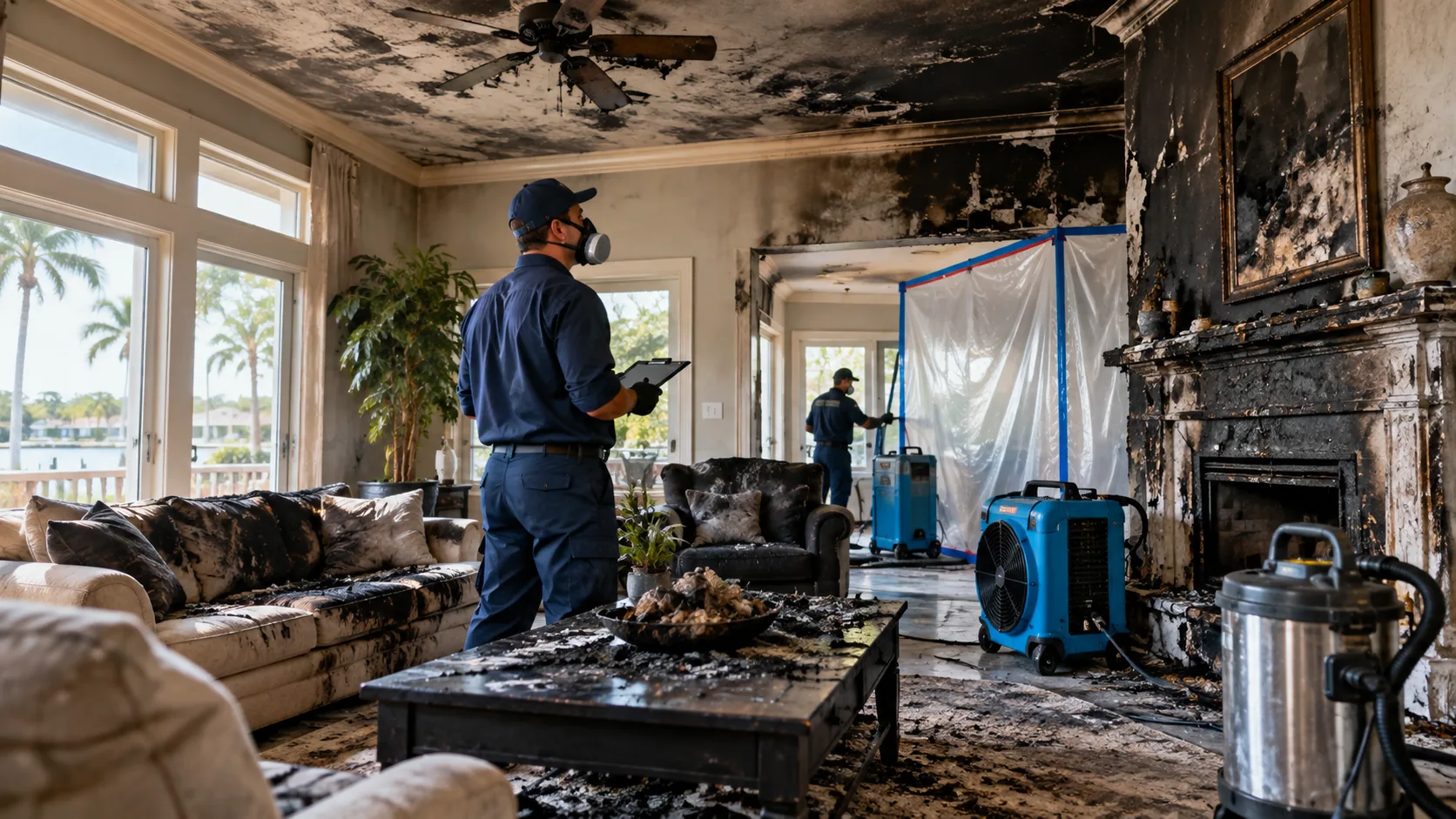
Before the restoration team arrives
Do not re-enter an unsafe fire-damaged area.
Keep the decision limited to what is safe and clearly observable.
Follow fire department or emergency instructions first.
Keep the decision limited to what is safe and clearly observable.
Avoid disturbing heavy soot or debris unnecessarily.
Keep the decision limited to what is safe and clearly observable.
Document visible conditions only from a safe location.
Keep the decision limited to what is safe and clearly observable.
Separate urgent temporary protection from long-term repair decisions.
Keep the decision limited to what is safe and clearly observable.
Ask for a documented assessment of smoke, soot, water and contents impacts.
Keep the decision limited to what is safe and clearly observable.
A service-specific restoration workflow
Emergency call and site safety
Scope the work from verified conditions, affected materials, access and the current state of the property.
Damage assessment and stabilization
Scope the work from verified conditions, affected materials, access and the current state of the property.
Smoke and soot residue control
Scope the work from verified conditions, affected materials, access and the current state of the property.
Contents assessment and cleaning coordination
Scope the work from verified conditions, affected materials, access and the current state of the property.
Cleaning, odor work and moisture review
Scope the work from verified conditions, affected materials, access and the current state of the property.
Repairs/reconstruction planning and documentation
Scope the work from verified conditions, affected materials, access and the current state of the property.
Homes, rentals, multifamily and commercial spaces
Single-family homes
The work plan follows the affected space, occupants, access and property use.
Condos and townhomes
The work plan follows the affected space, occupants, access and property use.
Apartments and multifamily properties
The work plan follows the affected space, occupants, access and property use.
Rental and vacation properties
The work plan follows the affected space, occupants, access and property use.
HOA-managed communities
The work plan follows the affected space, occupants, access and property use.
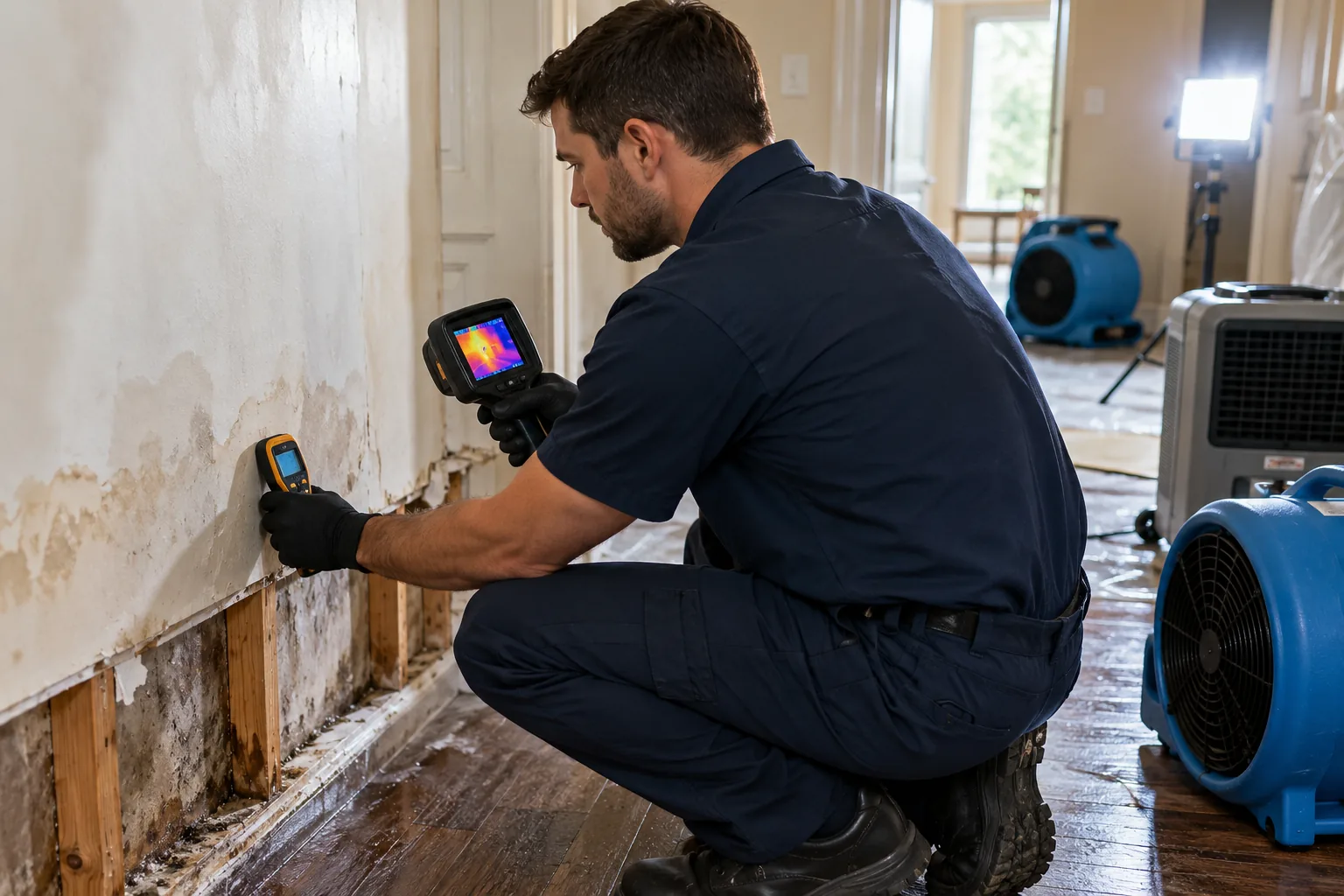
Keep a clear record of what changed.
A useful restoration record can include incident timing, photos, affected areas, temporary protection, service notes and progress information. Insurance coverage and claim decisions remain with the carrier.
Documentation supportFire Damage Restoration FAQs
What should I do after a fire?
Follow emergency and fire-department instructions first. Do not enter unsafe areas, disturb heavy soot unnecessarily, or begin risky cleanup. Once the property is safe to access, document conditions and arrange a structured assessment.
Does firefighting water cause additional damage?
It can. A fire loss may include water and moisture impacts in addition to heat, smoke and soot. Those conditions should be documented and managed as part of the overall loss assessment.
Can smoke damage travel beyond the burned room?
Yes. Smoke and fine residues can migrate through a property depending on the event, building layout and air movement. Adjacent rooms may require evaluation even when they were not directly burned.
What happens to damaged belongings?
Contents may be assessed for condition, cleaning potential, odor, structural impact and other factors. Pack-out and storage decisions should be documented rather than made from a quick visual guess.
How is fire restoration documented?
A thorough record may include photos, affected areas, soot and smoke observations, moisture conditions, contents notes, stabilization work and the scope of cleaning or repair.
Need help with fire damage restoration?
Use the city pages for a more specific local path, or call the emergency line directly.
Call (833) 606-6010