
Water Damage Restoration in Florida
Water damage restoration should answer three questions quickly: where the water came from, what materials are affected, and what needs to happen next.
Request Emergency Help
Tell us what happened and where the property is located. A callback request can include your ZIP and service need.
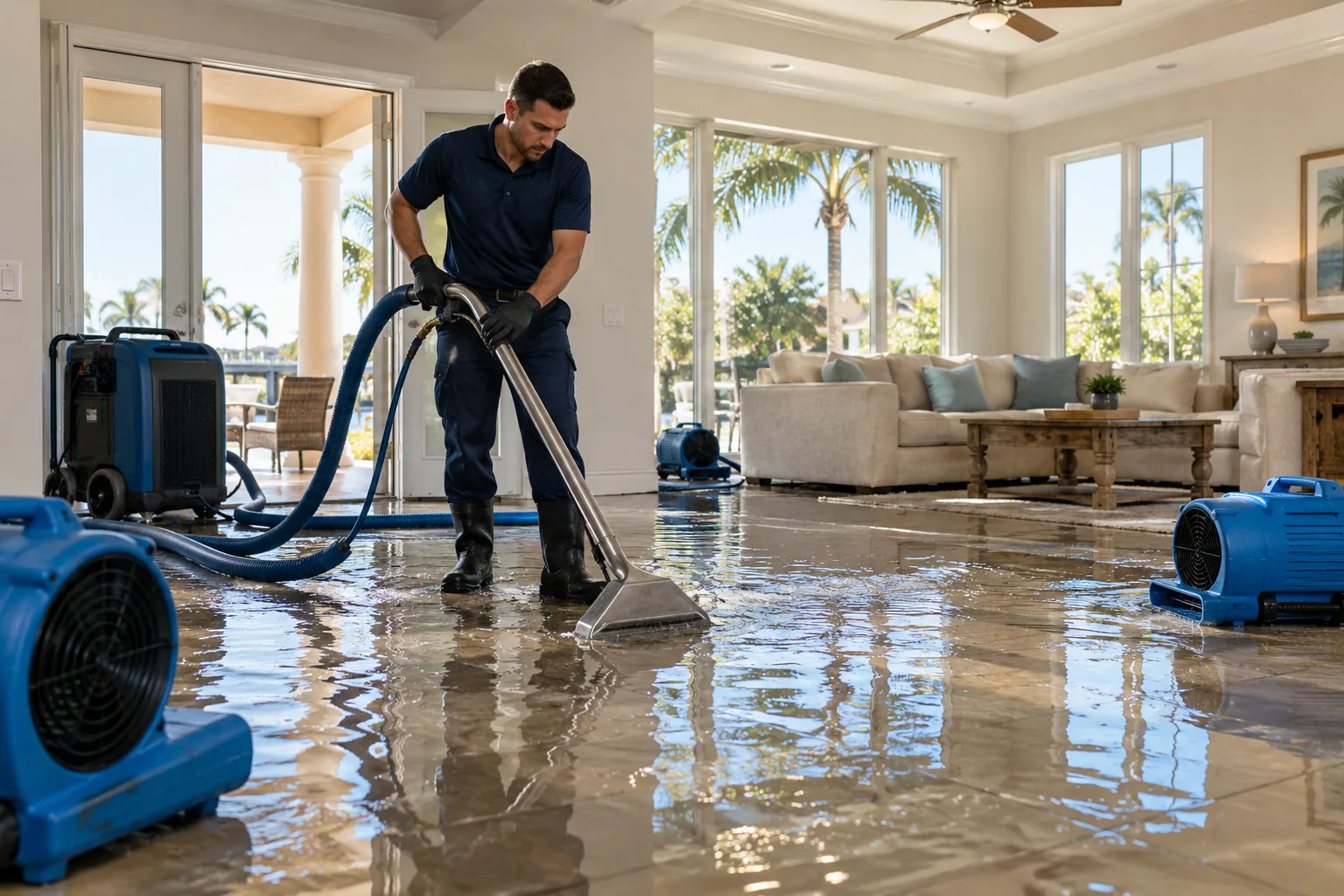
The goal is not simply to remove visible water. The scope can include extraction, moisture assessment, structural drying, cleaning, sanitation, contents coordination and restoration planning.
Water restoration is a sequence of decisions: make the area safe, understand the source, remove accessible water, control moisture, document conditions, and verify that affected materials are moving toward a stable condition. This page is organized around service intent, practical questions and the decisions property owners commonly face.
burst pipes
Use the service page as the starting point, then move into the location page for the city and ZIP coverage that applies to the property.
supply-line leaks
Use the service page as the starting point, then move into the location page for the city and ZIP coverage that applies to the property.
water heater failures
Use the service page as the starting point, then move into the location page for the city and ZIP coverage that applies to the property.
Common situations that deserve an organized response
Burst Pipes
Document the condition safely, note what changed, and ask for a service assessment that matches the loss.
Supply-Line Leaks
Document the condition safely, note what changed, and ask for a service assessment that matches the loss.
Water Heater Failures
Document the condition safely, note what changed, and ask for a service assessment that matches the loss.
Appliance Leaks
Document the condition safely, note what changed, and ask for a service assessment that matches the loss.
Roof Leaks
Document the condition safely, note what changed, and ask for a service assessment that matches the loss.
Hvac/Condensate Leaks
Document the condition safely, note what changed, and ask for a service assessment that matches the loss.
Toilet Or Fixture Overflows
Document the condition safely, note what changed, and ask for a service assessment that matches the loss.
Storm-Driven Water Intrusion
Document the condition safely, note what changed, and ask for a service assessment that matches the loss.
Sewage Backups
Document the condition safely, note what changed, and ask for a service assessment that matches the loss.
Hidden Moisture
Document the condition safely, note what changed, and ask for a service assessment that matches the loss.
Before the restoration team arrives
Keep people away from wet electrical areas or unsafe rooms.
Keep the decision limited to what is safe and clearly observable.
Stop the source only when it is safe and accessible.
Keep the decision limited to what is safe and clearly observable.
Do not use household vacuums on large amounts of standing water.
Keep the decision limited to what is safe and clearly observable.
Move vulnerable items only if doing so does not increase risk.
Keep the decision limited to what is safe and clearly observable.
Photograph visible damage from a safe position.
Keep the decision limited to what is safe and clearly observable.
Call for a professional assessment when water has reached materials or hidden areas.
Keep the decision limited to what is safe and clearly observable.
A service-specific restoration workflow
Emergency call and intake
Scope the work from verified conditions, affected materials, access and the current state of the property.
Inspection and moisture assessment
Scope the work from verified conditions, affected materials, access and the current state of the property.
Water extraction and source control review
Scope the work from verified conditions, affected materials, access and the current state of the property.
Structural drying and dehumidification
Scope the work from verified conditions, affected materials, access and the current state of the property.
Cleaning, sanitation and affected-material decisions
Scope the work from verified conditions, affected materials, access and the current state of the property.
Drying verification, documentation and restoration planning
Scope the work from verified conditions, affected materials, access and the current state of the property.
Homes, rentals, multifamily and commercial spaces
Single-family homes
The work plan follows the affected space, occupants, access and property use.
Condos and townhomes
The work plan follows the affected space, occupants, access and property use.
Apartments and multifamily properties
The work plan follows the affected space, occupants, access and property use.
Rental and vacation properties
The work plan follows the affected space, occupants, access and property use.
HOA-managed communities
The work plan follows the affected space, occupants, access and property use.
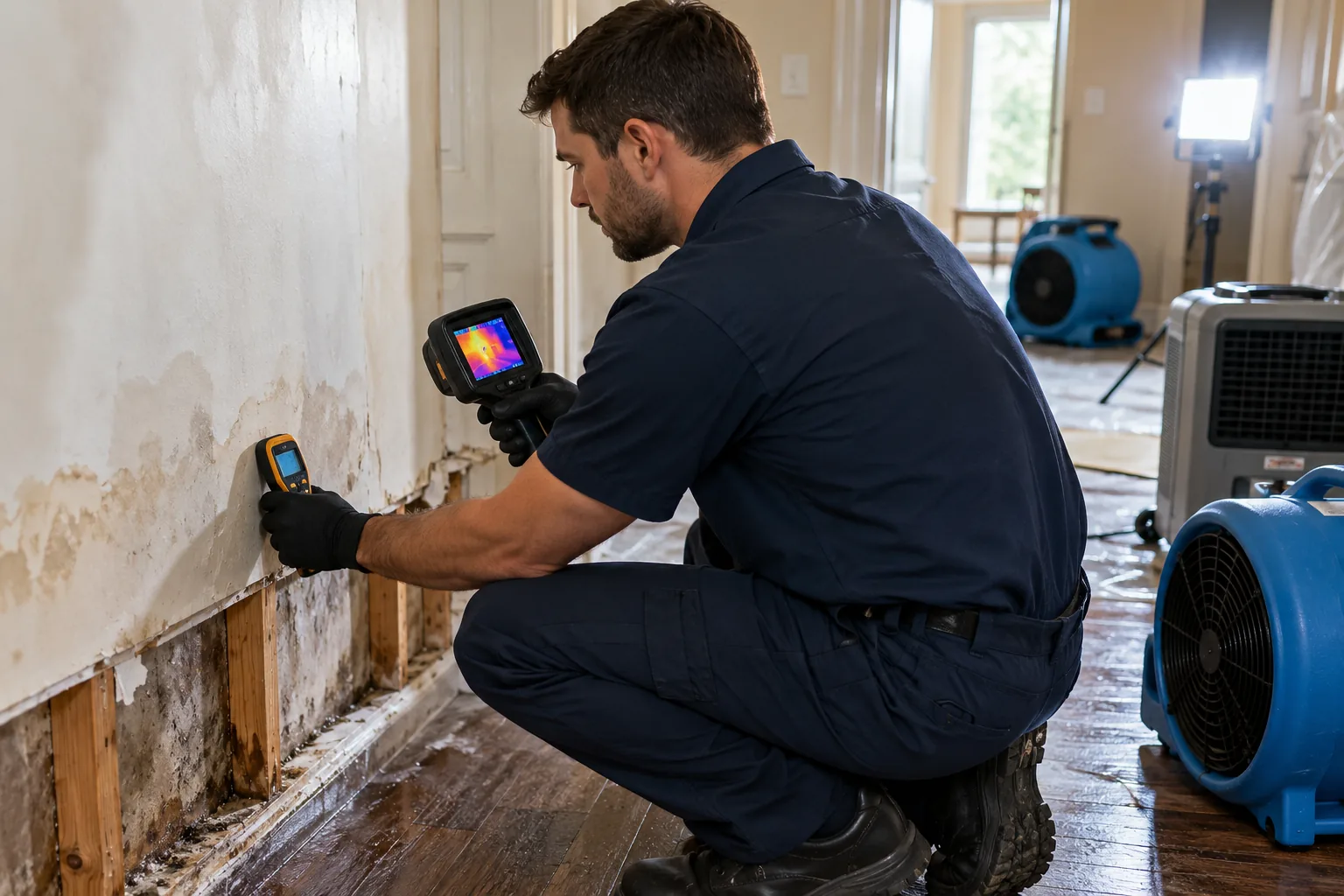
Keep a clear record of what changed.
A useful restoration record can include incident timing, photos, affected areas, temporary protection, service notes and progress information. Insurance coverage and claim decisions remain with the carrier.
Documentation supportWater Damage Restoration FAQs
What should I do first after water damage?
Make the area safe, stop the source only when it is safe to do so, keep people away from electrical hazards, document visible conditions and arrange an assessment when water has reached building materials or hidden spaces.
How is water damage restoration different from simply removing water?
Extraction removes accessible water, but restoration also considers moisture in floors, walls, cabinets, ceilings and other materials. Drying and verification are important because visible water can disappear before materials are actually dry.
Can water damage hide behind walls or under flooring?
Yes. Moisture can move into assemblies that are not immediately visible. A proper assessment uses the source, affected materials, visible conditions and moisture information to determine the drying scope.
How long can water damage restoration take?
Timing depends on the amount and location of water, material type, access, moisture conditions, contamination concerns and the work required after drying. A property-specific assessment is more useful than a fixed promise.
Should I take photos for insurance?
Yes, when it is safe. Record the affected rooms, visible materials, source if known, discovery time and changes before cleanup alters the scene. Coverage decisions remain with the insurance carrier.
When should water damage be treated as an emergency?
Active leaks, rapidly spreading water, contaminated water, wet electrical areas, ceiling collapse risk or water affecting valuable/critical spaces can require prompt professional attention.
Need help with water damage restoration?
Use the city pages for a more specific local path, or call the emergency line directly.
Call (833) 606-6010